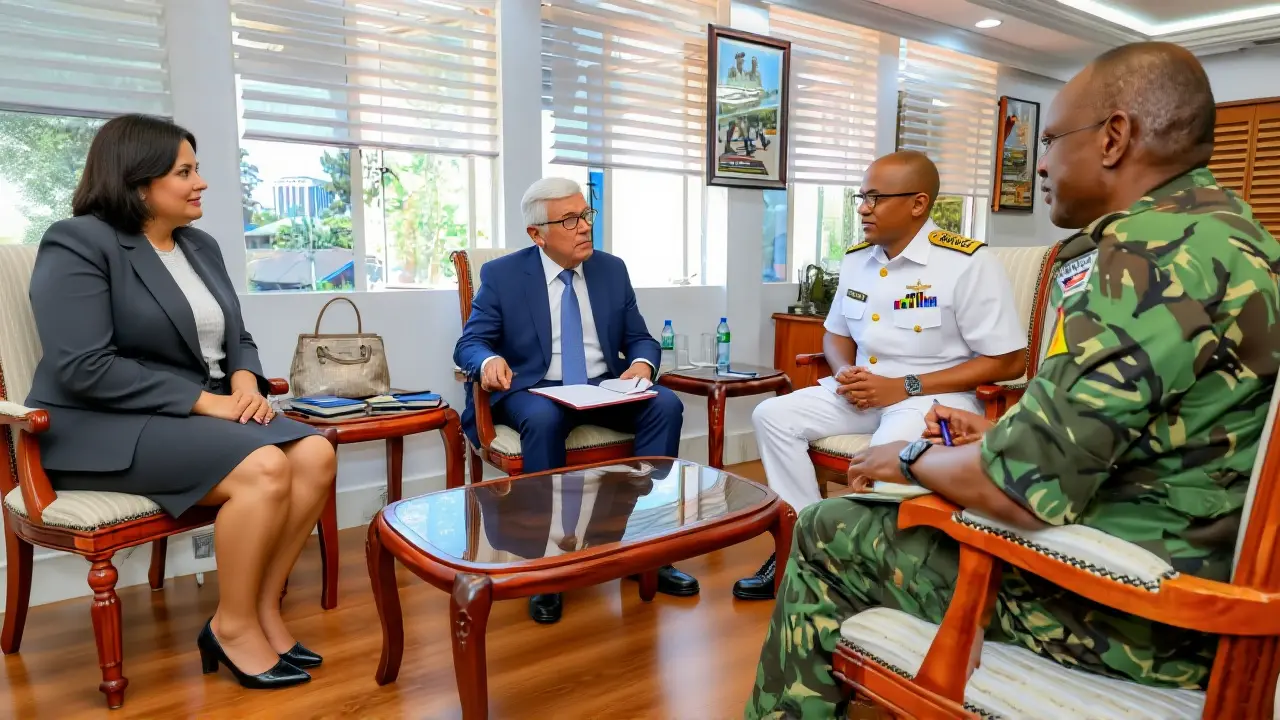
When General Charles Kahariri, Chief of the Kenya Defence Forces, welcomed top banking executives to Defence Headquarters this week, it wasn't just a routine handshake. It was a strategic reinforcement of a partnership that’s quietly reshaping how military families in Kenya access education and economic opportunity.
The meeting took place on February 3, 2026, bringing together the head of the nation’s armed forces with the leadership of Family Bank Limited. But here’s the thing: this isn’t about loans or mortgages for soldiers. It’s about survival skills, scholarships, and a broader social safety net for the dependants of those who serve.
A Partnership Beyond Banking
Sitting across from the CDF were two key figures from the financial sector: Titus Muya, Founder and Non-Executive Director of Family Bank Limited, and Nancy Njau, Chief Executive Officer and Managing Director. Their presence signaled more than corporate courtesy; it highlighted an ongoing, structured collaboration between the bank, its philanthropic arm, and the military.
The twist is that the bank doesn’t operate alone here. The initiative flows through the Military Wives Association of Kenya (MWAK), acting as the bridge between corporate resources and military communities. This three-way alliance—linking Family Bank Limited, the Family Group Foundation, and the KDF—has been working behind the scenes to tackle youth unemployment and educational gaps within military households.
Skills Over Sympathy
Turns out, the focus is heavily on practical empowerment rather than handouts. According to the Ministry of Defence, the programmes are designed to equip young people with "vocational, enterprise development, and practical life skills." That’s specific language. It suggests training in trades, business management, and the soft skills needed to navigate the modern job market.
These initiatives specifically target KDF youth dependants. Why? Because the children of service members often face unique challenges—frequent relocations, parents deployed away from home, and the need for stable career paths once they enter the workforce. By offering "accessible, industry-relevant training," the partnership aims to boost employability and entrepreneurship directly.
But wait, there’s another layer. The collaboration also provides high school scholarships to "bright but needy orphans." This educational support ensures that academic potential isn’t wasted due to financial constraints, a critical intervention for vulnerable children linked to the defence community.
Commending Broader Impact
During the engagement, General Kahariri didn’t just thank them for the money. He expressed deep appreciation for the "continued support" extended to both serving and retired personnel. That distinction matters. Retired soldiers often fall through the cracks of institutional support, yet this partnership explicitly includes them in its scope.
He further commended the institutions for their wider contributions, including:
- Community initiatives that strengthen local ties.
- Environmental programmes, notably support for the Environmental Soldier Programme.
- Livelihood projects that benefit KDF members and the country at large.
This last point is significant. By framing these efforts as beneficial to "the country at large," the CDF is positioning the partnership as a model for corporate-social responsibility that extends beyond the barracks.
Why This Matters Now
Family Bank Limited has grown from humble beginnings to become what some describe as a "cornerstone of Kenya's financial landscape." Yet, this meeting shows that their influence isn’t limited to balance sheets. In a time when national dialogue often focuses on economic hardship and youth unemployment, private-public partnerships like this offer tangible solutions.
The details of future funding rounds are still unclear, but the trajectory is set. With direct engagement from the highest levels of the KDF and sustained commitment from Family Bank’s leadership, the programme is likely to expand. For thousands of military families, this means better schools, sharper skills, and a clearer path to economic independence.
Frequently Asked Questions
Who attended the meeting at Defence Headquarters?
The meeting was hosted by General Charles Kahariri, Chief of the Kenya Defence Forces. Guests included Titus Muya, Founder and Non-Executive Director of Family Bank Limited, and Nancy Njau, the bank's CEO and Managing Director. They discussed ongoing partnerships supporting military families.
What specific programmes does Family Bank support for KDF families?
Through the Family Group Foundation and MWAK, the bank supports youth development initiatives focusing on vocational skills, enterprise development, and practical life skills. They also provide high school scholarships to bright but needy orphans within the KDF community.
Does this partnership include retired military personnel?
Yes. General Kahariri explicitly acknowledged support for "both serving and retired personnel." The livelihood projects and community initiatives are designed to benefit the entire KDF family ecosystem, ensuring retired members and their dependants are not excluded.
What role does the Military Wives Association of Kenya play?
MWAK acts as the implementation channel for the partnership. It connects the resources of Family Bank Limited and the Family Group Foundation with the needs of KDF families, facilitating the delivery of training, scholarships, and other welfare programmes.
Are there environmental components to this partnership?
Yes. The CDF commended the partners for their environmental programmes, specifically mentioning support for the Environmental Soldier Programme. This indicates a holistic approach that combines social welfare with environmental stewardship within the defence community.