China Ministry of Commerce
When you hear China Ministry of Commerce, the government body that manages China’s international trade, domestic market regulations, and foreign investment policies. Also known as MOFCOM, it’s the engine behind China’s trade wars, export bans, and supply chain shifts that ripple through every corner of the global economy. This isn’t just paperwork—it’s the reason your phone costs more, why rare earth metals suddenly vanish from shelves, and how a single announcement can crash stock markets from Tokyo to Toronto.
The China Ministry of Commerce, the agency that enforces China’s trade laws and negotiates bilateral deals doesn’t just react to events—it sets them. In 2023, it banned exports of gallium and germanium, two materials critical for chips and solar panels. That move wasn’t random. It was a direct response to U.S. sanctions on Chinese tech firms. The same agency also controls who gets access to Chinese markets. If you’re a European automaker or an American farm equipment supplier, your chances of selling in China depend on MOFCOM’s latest approval list. And it doesn’t stop there. MOFCOM works hand-in-hand with the Chinese State Council, the top administrative body that oversees all ministries, including commerce to align trade moves with national security goals.
What you won’t see in headlines are the quiet behind-the-scenes actions: how MOFCOM quietly adjusts import quotas to protect domestic steel producers, or how it pressures foreign companies to hand over tech secrets in exchange for market access. It’s the reason some U.S. firms now build factories in Vietnam or India—not because they want to, but because China’s trade rules made it too risky to stay. The agency also tracks global commodity flows, monitors currency manipulation, and even steps in when Chinese consumers start hoarding rice or soybeans. It’s not just about trade numbers—it’s about control.
And it’s not just about China. Every time MOFCOM changes a rule, it forces other countries to respond. The EU had to rewrite its battery regulations after China restricted lithium exports. The U.S. had to scramble to find new suppliers for rare earths. Even African nations feel the impact when MOFCOM shifts its aid-for-minerals deals. This isn’t diplomacy—it’s economic statecraft.
Below, you’ll find real stories of how MOFCOM’s decisions play out on the ground: from factories in Guangdong to auction houses in Johannesburg, from tech startups in Berlin to farmers in Iowa. These aren’t abstract policies. They’re life-changing moves for people and businesses around the world. What you’re about to read shows how one government agency, tucked away in Beijing, holds more power over your daily life than you might realize.
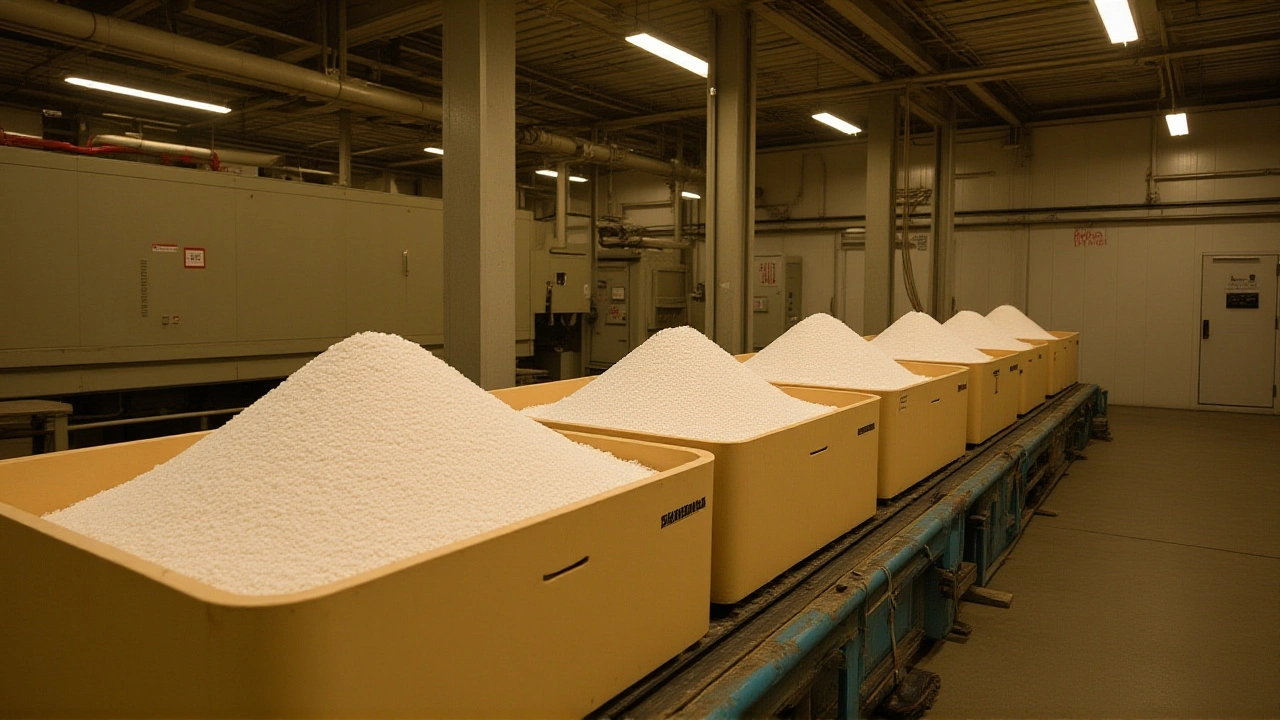
Lynas Shares Surge as China’s Rare Earth Export Ban Shakes Global Auto and Defense Supply Chains
China’s 2025 rare earth export bans triggered Ford’s factory shutdown and sent Lynas Rare Earths shares soaring, exposing global dependence on Beijing’s control of 85% of refining capacity and reshaping defense and auto supply chains.
View more